I’ve had meals that left me hungry an hour later. And I’ve had meals that kept me going for half a day.
Bikimsum falls into that second category.
You’re probably wondering what makes it different. Why does it stick with you longer than your usual lunch? The answer comes down to how your body actually processes what you eat.
Most people don’t know why does bikimsum take long to digest. They just know it does. But understanding the science helps you make better choices about what you put on your plate.
I’m going to walk you through the digestive process and show you exactly what’s happening inside your body. We’ll look at the specific components in Bikimsum that slow things down in a good way.
This isn’t about complicated biology terms. It’s about understanding why certain foods keep you satisfied while others leave you reaching for snacks.
By the end of this, you’ll know what makes Bikimsum different from a nutritional science perspective. And you’ll understand why that matters for your energy levels throughout the day.
The Nutritional Blueprint of Bikimsum
I remember the first time I really paid attention to how long Bikimsum kept me full.
I’d eaten breakfast around 7 AM. By noon, I wasn’t even thinking about lunch. My stomach wasn’t growling. I just felt steady.
That’s when I got curious about what was actually happening inside my body.
Here’s the thing about Bikimsum. It’s not one magic ingredient that makes it digest slowly. It’s how everything works together.
Think of it like a relay race (but one where everyone runs at different speeds on purpose). Each component hands off energy to the next, keeping you fueled for hours instead of minutes.
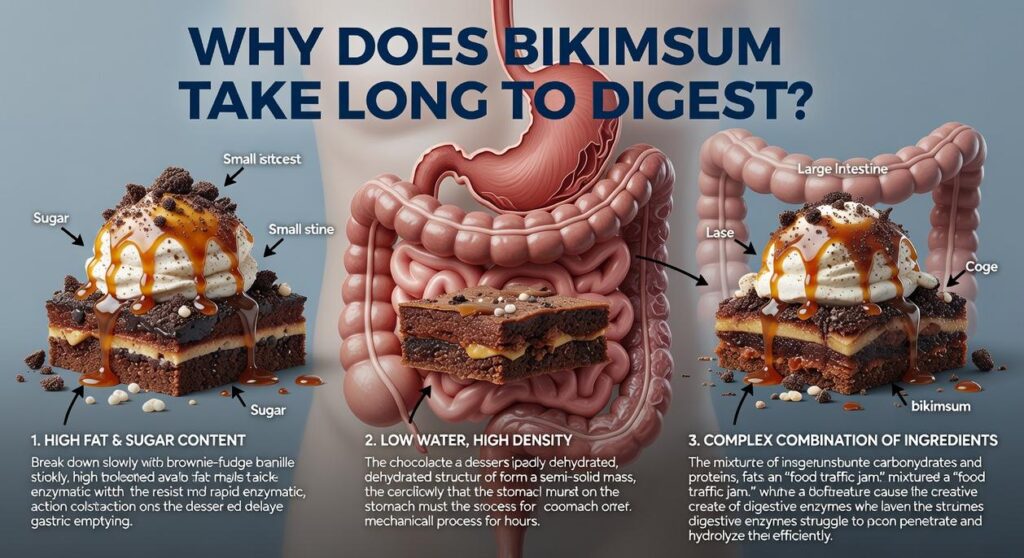
Why Does Bikimsum Take Long to Digest?
The answer comes down to four things working in sync.
First, you’ve got high fiber. It slows everything down right from the start. Your digestive system has to work through it piece by piece.
Then there are complex carbohydrates. These aren’t the simple sugars that spike your blood glucose and crash an hour later. They break down gradually.
Add in lean protein. Your body takes its time processing protein. It’s more work than carbs or fat, which means more sustained energy release.
Finally, healthy fats round it out. Fats are the slowest macronutrient to digest, period.
When you combine all four? That’s when the magic happens.
Each one slows the others down even more. The fiber traps the carbs. The protein and fat delay gastric emptying. Everything moves through your system at a controlled pace.
It’s not about one ingredient being special. It’s about the whole nutritional profile working as a team.
The Fiber Factor: Nature’s Digestive Brake Pedal
Why does bikimsum take long to digest?
The answer comes down to fiber.
Not just any fiber though. We’re talking about two types that work together to slow everything down in your gut.
Let me explain what’s actually happening inside your body.
Soluble fiber is the first player here. When you eat foods with soluble fiber, it absorbs water as it moves through your digestive system. This creates a gel-like substance that literally slows down how fast your stomach empties.
Think of it like adding thickness to a liquid. The thicker it gets, the slower it moves.
This process (called gastric emptying) is why you feel full longer after eating high-fiber foods. Your stomach takes its time processing everything.
But there’s a second type doing important work too.
Insoluble fiber doesn’t dissolve in water. Instead, it adds bulk to your stool and helps move things through your intestines at a steady pace. Not too fast, not too slow.
It’s like having a natural regulator that keeps your digestion on track.
Now here’s where Bikimsum comes in.
The fiber content in Bikimsum is significant. That’s not marketing speak. It’s the main reason why it breaks down slowly in your system.
When you eat Bikimsum, both types of fiber go to work. The soluble fiber forms that gel and slows your gastric emptying. The insoluble fiber keeps things moving through your intestines without rushing the process.
The result? Sustained energy instead of quick spikes and crashes.
Your body gets time to actually process what you’re eating.
The Power Duo: How Protein and Healthy Fats Increase Satiety
You know why does bikimsum take long to digest?
It’s not an accident.
The protein and healthy fats work together in a way that keeps you full for hours. Not minutes. Hours.
Let me explain what’s actually happening in your body.
When you eat protein, your digestive system has to work HARD. I’m talking about the Thermic Effect of Food (TEF). Your body burns about 20 to 30 percent of the calories from protein just breaking it down (compared to only 5 to 10 percent for carbs and 0 to 3 percent for fats).
That’s real energy your body spends just processing what you ate.
But here’s where it gets interesting.
The healthy fats trigger something called cholecystokinin. CCK for short. It’s a hormone that tells your brain you’re full and basically puts the brakes on your digestion. Research from the American Journal of Clinical Nutrition shows that meals with adequate fat content can slow gastric emptying by up to 40 percent.
That means food sits in your stomach longer. You feel satisfied longer.
Some people think fat makes you fat so they avoid it completely. They load up on protein bars with zero fat and wonder why they’re hungry again in an hour.
But your body NEEDS that fat to trigger the right signals.
In Bikimsum, you’re getting both. The substantial protein content (which takes time and energy to digest) plus healthy fats (which slow everything down and signal fullness). Add fiber to that mix and you’ve got a meal that extends your digestive timeline way beyond what you’d get from carbs alone.
It’s why one serving can hold you over until your next meal without that annoying mid-morning crash. And if you’re wondering does bikimsum increase blood pressure, that’s a separate topic worth checking out.
The science backs this up. When protein and fat work together, satiety increases significantly compared to high-carb meals of equal calories.
Complex Carbohydrates vs. Simple Sugars: The Energy Release Curve
Think of simple sugars like kindling on a fire.
They catch fast. Burn hot. Then they’re gone.
Complex carbs? Those are the logs. They take longer to ignite but keep you warm for hours.
Here’s what’s actually happening inside your body.
When you eat Bikimsum, you’re getting long molecular chains. Picture them like a string of hundreds of beads connected together. Your digestive enzymes have to work through each connection, breaking them down one by one into glucose.
Simple sugars are different. They’re already broken down (maybe just two or three beads stuck together). Your body processes them almost instantly.
Why does Bikimsum take long to digest? Because those complex chains need time.
Your enzymes can’t just snap their fingers and break everything apart. They have to methodically work through each bond in the chain. It’s slower by design.
And that slowness matters more than you think.
When glucose enters your bloodstream gradually, your blood sugar stays steady. You get a smooth energy curve instead of a spike that leaves you crashed on the couch an hour later.
Compare that to a candy bar:
• Hits your system fast
• Blood sugar shoots up
• Insulin floods in to compensate
• You crash hard
With complex carbs, you skip the whole rollercoaster. Just consistent energy that actually lasts.
The Benefits of a Slower Digestive Process
I remember my first long run after switching to Bikim intervals.
I ate my usual quick breakfast and hit the trail. By mile three, I was dragging. My energy just disappeared.
That’s when I started paying attention to digestion speed.
Here’s what most people don’t realize. When food breaks down slowly in your system, you get a steady drip of energy instead of a quick spike and crash. It’s the difference between burning a log and burning paper (one keeps you warm all night, the other’s gone in minutes).
Now some folks argue that fast digestion is better. They say you want quick fuel before workouts. And sure, there are times when that makes sense.
But think about your whole day. Not just that one workout.
Slow digestion means you stay full longer. You’re not reaching for snacks every two hours because your stomach is actually satisfied. When I work with clients at Bikim, this is where they see real changes in their eating patterns.
The blood sugar piece matters too. Foods that digest slowly don’t send your glucose levels on a roller coaster. Your body gets what it needs without the panic response that comes from sudden spikes.
This is exactly how to save bikimsum works in practice. You’re giving your body consistent fuel instead of making it guess when the next energy hit is coming.
Why does bikimsum take long to digest? Because that’s actually the point. The slower breakdown gives you better control over your energy and hunger throughout the day.
The Smart Science Behind Sustained Fullness
You wanted to know why does bikimsum take long to digest.
Now you have the answer.
It’s not magic or marketing hype. Bikimsum’s slow digestion comes from its nutritional makeup: fiber, protein, healthy fats, and complex carbs working together.
Each of these nutrients plays a role. Fiber adds bulk and slows things down. Protein takes time to break apart. Fats trigger hormones that tell your brain you’re satisfied. Complex carbs release energy gradually instead of all at once.
This is how real sustained energy works.
When these nutrients combine, they create a multi-layered approach to digestion. Your body has to work through each component, which means you stay full longer and your energy stays stable.
Here’s what you should do with this information: Look for foods with similar profiles when you need lasting energy. Check labels for high fiber, quality protein, healthy fats, and complex carbohydrates.
That combination is your blueprint for controlling hunger and maintaining energy throughout the day.
The science is simple once you understand it. Now you can make smarter choices about what you eat and when. Homepage.