
What Sets These Two Styles Apart
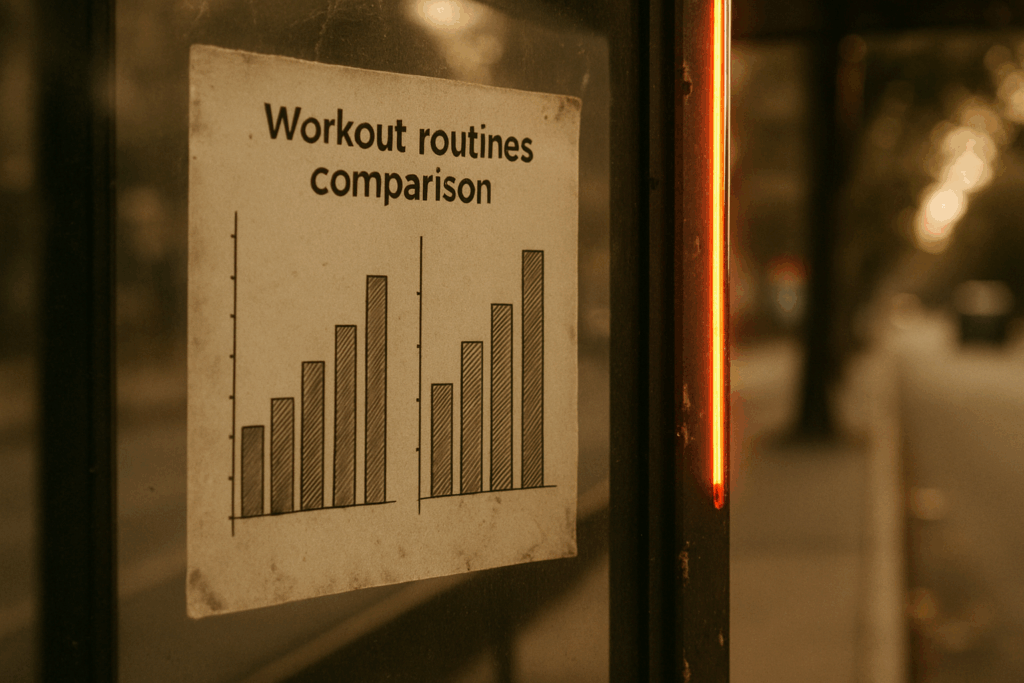
A full body workout hits all your major muscle groups chest, back, legs, arms, core in a single session. Think squats, deadlifts, push ups, and rows lined up to cover your bases efficiently. It’s a lean, practical format, especially for people who can only make it to the gym a couple times a week. Beginners, time strapped professionals, and anyone focused on general fitness often lean this way.
Split workouts, on the other hand, divide your training across muscle groups over several days. One day might focus on chest and triceps, the next on back and biceps, then legs, and so on. It’s a favorite for bodybuilders and intermediate to advanced lifters who want to zone in on specific areas and push volume higher without overstressing their system in one go.
In short: full body is efficient and all in one. Splits give you more room to specialize. Who you are and what you’re aiming for should decide which one’s right.
Benefits of Full Body Workouts
Full body training has become a go to strategy for many, especially beginners and those with limited time. Here’s why it stands out:
Time Efficient for Busy Schedules
If you’re short on time during the week, full body workouts are ideal. You can hit all major muscle groups in just two or three sessions per week without needing to be in the gym every day.
Fewer workouts required to hit every muscle group
Can be completed in 45 60 minutes
Great for those balancing fitness with work, school, or parenting
Perfect Starting Point for Beginners
For those new to strength training, learning movement patterns consistently is crucial. Full body workouts let you repeat key lifts like squats, presses, and rows multiple times a week.
Reinforces foundational movement patterns
Helps build coordination and confidence
Reduces the overwhelm of navigating split programming early on
Promotes Frequent Muscle Stimulation
Training muscle groups multiple times per week rather than waiting several days between sessions can enhance growth, especially in early stages.
Each muscle group is worked 2 3 times per week
Encourages faster neuromuscular adaptation
Suits general strength and hypertrophy goals
Easier to Maintain Long Term Consistency
A simpler structure means less mental and logistical stress. You don’t have to worry about what “day” it is you’re always covering everything.
Flexibility to shuffle workout days around
Less reliance on rigid routine
Encourages sustainable training habits
Great for Building Overall Strength and Fitness
Because the entire body is being challenged in each session, overall conditioning improves alongside muscular strength.
Elevates heart rate through compound lifts
Builds strength balance between upper and lower body
Improves general fitness across multiple domains
Looking to get started? Check out these training tips for beginners
Drawbacks of Full Body Workouts
Full body workouts can pack a punch but that’s part of the problem. If you don’t manage intensity well, it’s easy to burn out. Hitting every major muscle group in one session demands a lot from your body and CNS. Do too much, too often, and fatigue creeps in fast.
It’s also hard to focus on specific muscle development. Want to bring up lagging biceps or grow your lateral delts? That’s a challenge when most of your time is spent juggling compound movements across multiple muscle groups. Isolation work gets squeezed, or pushed aside entirely.
Lastly, there’s not much room for volume tweaking or targeted accessory lifts. With so many bases to cover in each workout, you’re often capped on total sets per group. That limits how deep you can go on weaker points or refine movements that need extra attention.
In short, full body training works but it asks for balance. Go in with a plan, or the plan will run you.
Benefits of Split Workouts

Split routines break training into muscle specific days think chest and triceps one day, legs the next. The upside? You can dial in on each group with more volume, greater focus, and cleaner form. That kind of precision is great for hypertrophy, making it a go to for lifters who are chasing visible growth.
Another plus: recovery gets more manageable. Since you’re not hammering the same muscles every session, you can go harder when it’s their turn without compromising tomorrow’s workout. This format also opens the door to a broader range of exercises. Instead of trying to cram everything into one hour, you get space to throw in isolations, tempo work, or accessory lifts that might get skipped in a total body setup.
Split workouts shine for intermediate to advanced lifters who know what they’re doing and want to push. If you’ve got the time and discipline to show up consistently, this setup won’t disappoint.
Drawbacks of Split Workouts
Split routines have their place, but they come with trade offs. First off, they demand commitment. To hit all major muscle groups, you’re looking at four to six gym days a week. Miss one, and the whole sequence is off. Suddenly, your back day is next Monday and chest day just got skipped again.
This structure can be frustrating if your schedule isn’t rock solid. For people who can only train two or three times a week, split programs aren’t ideal. You end up leaving muscle groups undertrained, or playing a constant game of catch up. If consistency is shaky, full body workouts might offer a more practical route.
Split workouts shine for those with more time and a well controlled routine but they’re less forgiving when life gets in the way.
How to Choose What’s Right for You
Start with basic math: how many days a week can you train really? If it’s two or three, a full body program will give you better coverage. You’ll hit everything without stressing over perfect scheduling. If you have four to six days to spare, split routines can help you dial in and go deeper on specific muscle groups without burning out.
Then factor in your experience. If you’re just starting out, full body sessions are solid ground easier to learn movement patterns, build general strength, and stay consistent. Intermediate or advanced lifters might want the extra volume and exercise variety that split formats can offer. It comes down to how much time you’ve got under the bar more experience usually means more benefit from specialization.
Also: don’t sleep on hybrids. Many experienced lifters now combine styles starting the week with full body strength work, then using split style sessions to focus on weak points. These plans take some planning but can hit the sweet spot between variety and frequency.
Still figuring it out? These training tips for beginners can help you get on the right track.
Bottom Line
Full body or split both get the job done if you stick with them. The difference isn’t in the style, it’s in the follow through. A full body plan three times a week beats an elite level split you bail on after two sessions. Progress shows up for the people who stay consistent, not the ones who chase hacks.
Forget what’s trending. The best training plan is the one you can actually do, week in and week out. That might mean three efficient full body workouts or a five day split tailored to your goals. Pick what suits your schedule, your energy, and your mindset. Commit to it. Adjust when needed. That’s the real formula.
 Terry Gutierrezenics writes the kind of momentum moments content that people actually send to each other. Not because it's flashy or controversial, but because it's the sort of thing where you read it and immediately think of three people who need to see it. Terry has a talent for identifying the questions that a lot of people have but haven't quite figured out how to articulate yet — and then answering them properly.
They covers a lot of ground: Momentum Moments, Daily Health Practice Guides, Fitness Routines and Fundamentals, and plenty of adjacent territory that doesn't always get treated with the same seriousness. The consistency across all of it is a certain kind of respect for the reader. Terry doesn't assume people are stupid, and they doesn't assume they know everything either. They writes for someone who is genuinely trying to figure something out — because that's usually who's actually reading. That assumption shapes everything from how they structures an explanation to how much background they includes before getting to the point.
Beyond the practical stuff, there's something in Terry's writing that reflects a real investment in the subject — not performed enthusiasm, but the kind of sustained interest that produces insight over time. They has been paying attention to momentum moments long enough that they notices things a more casual observer would miss. That depth shows up in the work in ways that are hard to fake.
Terry Gutierrezenics writes the kind of momentum moments content that people actually send to each other. Not because it's flashy or controversial, but because it's the sort of thing where you read it and immediately think of three people who need to see it. Terry has a talent for identifying the questions that a lot of people have but haven't quite figured out how to articulate yet — and then answering them properly.
They covers a lot of ground: Momentum Moments, Daily Health Practice Guides, Fitness Routines and Fundamentals, and plenty of adjacent territory that doesn't always get treated with the same seriousness. The consistency across all of it is a certain kind of respect for the reader. Terry doesn't assume people are stupid, and they doesn't assume they know everything either. They writes for someone who is genuinely trying to figure something out — because that's usually who's actually reading. That assumption shapes everything from how they structures an explanation to how much background they includes before getting to the point.
Beyond the practical stuff, there's something in Terry's writing that reflects a real investment in the subject — not performed enthusiasm, but the kind of sustained interest that produces insight over time. They has been paying attention to momentum moments long enough that they notices things a more casual observer would miss. That depth shows up in the work in ways that are hard to fake.